
The UK is a nation of workaholics. A third of people check their emails as soon as they wake up, while more than half work longer than their contracted hours at least four days a week. As for holiday? That’s the last thing on many diligent professionals’ minds.
But constantly having your nose to the grindstone isn’t a good thing. Employees who don’t use their full annual leave entitlement are often more stressed, tired and less productive than those who regularly rest and relax. And this has a detrimental impact on both the individual worker and their employer.
If you’ve still got paid leave to take, or you’re managing a team that hardly ever takes time off, here are 7 signs that it’s time to book a holiday from work:
1. You’re constantly feeling tired
We all have days where we can’t get going, but if you’re constantly feeling fatigued then that should be warning sign.
Over half of employees suffer from burnout during their career – if your tank is almost empty, you’ll eventually come to a standstill. Taking time off will help you to catch up on sleep and recharge your mental and physical batteries, so you return to work with higher energy levels.
2. You dread the start of the week
Even if you love your job, clocking in day after day without taking breaks can make work feel monotonous. The constant pressure of performing can grind down the most passionate professionals.
If you’re getting the ‘Sunday night dread’, consider booking a few days off. Putting space between you and work will give you the chance to remember why you loved your job in the first place.
3. You’re snapping at colleagues
The more stressed and tired we become, the shorter our tempers get. Simple things tip us over the edge, leading us to shout at colleagues or act in ways that feel out of character. And the only way for your mood to simmer back down is to take some time off to regroup.
While all professionals need to treat co-workers with respect and compassion, it’s even more important to be aware of your tone when you’re looking after a team.
In 2019, Google released some research into what makes a good manager, and its list included being a good coach and showing concern for others’ wellbeing. However, it’s hard to look after your team’s health and performance if you’re not prioritising your own.
4. You’re under the weather
We tend to think of burnout as being a mental health issue, but overworking can show up in your physical wellbeing too. Tired, run down employees may experience headaches, heartburn, mouth ulcers, insomnia and chest tightness – to name a few symptoms.
Rather than ignoring these signs or hoping they’ll go away, listen to what your body is telling you and slow down. Something as simple as a short, de-stressing holiday can get your health back on track.
Important note: if any of your physical symptoms persist, make sure you see your doctor as soon as possible.
5. You make silly mistakes
Ironically, one of the reasons that people don’t take time off work is that they don’t want to let others down. But the tiredness of constantly performing can affect your usual high standards.
If you’re starting to slip up more often or missing important details, this could be a sign that you need to take annual leave. And if you’re managing colleagues who seem to be working below their usual standard, check when they last took a day off before you start questioning their quality or commitment.
6. You can’t remember the last time you had a day off
A really simple way to tell if it’s time to book annual leave is to ask yourself when you last had a day off. If you have to think way back, a break is overdue!
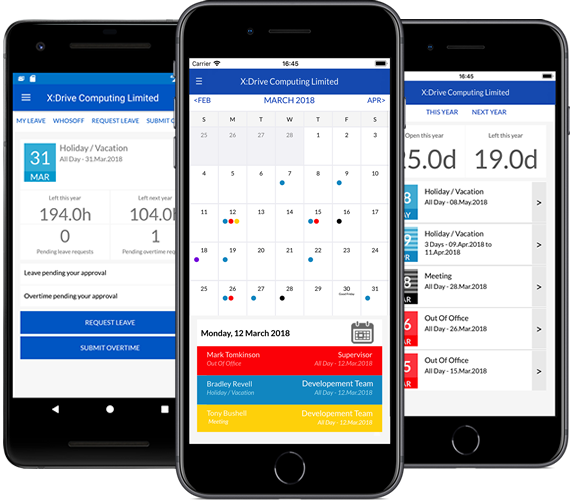
Another way to make sure you’re looking after your personal needs is to check your remaining allowance for this year. If your company has an online holiday calendar, you can see at a glance how many days you have left to use – don’t let them pile up and lapse.
7. You find it hard to ‘get in the zone’
Even if you’re feeling physically and mentally healthy, enjoy your job, have great colleague relationships and took a day off in recent memory, you may still be struggling to find your productive sweet spot. And this can be a sign that you need to book more annual leave.
Remember that it’s OK to take several breaks in short succession if that’s what you need to refocus your energy and improve your performance. The main thing is to work closely with managers and HR to make sure your annual leave doesn’t impact other people taking time off.
Find the time to take a break
When you’re hard working and loyal to a company, there’s a temptation to push through the burnout barrier – even if you’ve got leave left to take and you haven’t had time off in ages. But this won’t help you or your employer maintain high standards.
Taking a break is a good thing, which should be encouraged as part of a strong company culture. And combining a positive attitude with the right tools to manage annual leave makes it easier to give everyone the days off they deserve.
Online leave management software simplifies the process of tracking, requesting and recording holiday, so that every member of staff can use their full entitlement without it impacting business productivity. Nothing stands in the way of a well-earned rest when you need it most.
Importantly, online holiday software also gives team leaders and managers insight into how much leave your direct reports have booked. So you can keep a close eye on any colleagues that have huge amounts left to take, encouraging them to use it up before it runs out.
WhosOff leave management software gives companies the power to manage time off online – from allocating holiday to each team member, to approving requests and logging them in a central cloud-based planner.
Book a free trial to explore WhosOff free of charge.
Photo by Cup of Couple of Pexels.com


Similar articles
06.NOV.2026
Still managing holidays with a spreadsheet, a shared Outlook calendar or a pile of emails? You’re not alone, but there’s a better way. We’ve compared 14 of the most popular leave management tools for 2026, from simple holiday planners to full HR platforms. For each one we cover features, pricing and who it suits best, so you can find the right fit for your team without sitting through a dozen demos.
04.NOV.2026
Not all leave management software does the same job. Some tools stop at basic holiday booking; others add staffing restrictions, sickness tracking, overtime management, and reporting that actually saves time instead of creating more admin. Here’s a complete UK guide to the ten features that genuinely matter - and how to work out which ones your business actually needs.
30.SEP.2026
Most businesses don't set out to buy leave management software - they start with a spreadsheet, or a shared Outlook calendar, and it works fine for a while. Then the balances stop adding up, two people get approved for the same week, and nobody's sure which file is actually current. Here's an honest, feature-by-feature comparison of spreadsheets, Outlook calendars, and dedicated leave management software - including exactly where each one starts to fall apart.
22.SEP.2026
Who's in, who's off, and when are they back? It sounds like a simple question - until sickness, holiday clashes, and a spreadsheet nobody's updated since last week make it anything but. Here's a full UK guide to what absence management software actually does, how it differs from leave management, and the rules worth knowing before you build (or fix) your process.